

Averroes is our next topic in the Pursuit of Justice series here at Much Ado About Something. Averroes is distinctly not a part of Western political thought, but he should be. Averroes left no memoir or autobiography, so much of his life is vague and from other people’s perspectives of the time. I picked Averroes because he was a philosopher that I did not have much experience with, but established a premise for Islamic thought through interpretation of Aristotle and Plato, much like Thomas Aquinas. Averroes belonged to an influential Andalusian family, famous for its judicial power and for its scholarship in the religious sciences. This propelled him to stardom within the Muslim and even Christian world, becoming chief physician and on the tongue of every theological harlequin of the Medieval age. However, this notwithstanding, Averroes suffered an unexplained fall-from-grace, being exiled at the end of his life to die alone. His story and and investigation into how he got there deserves to be told.
Without further ado, let’s set the background.
Enjoy - JR
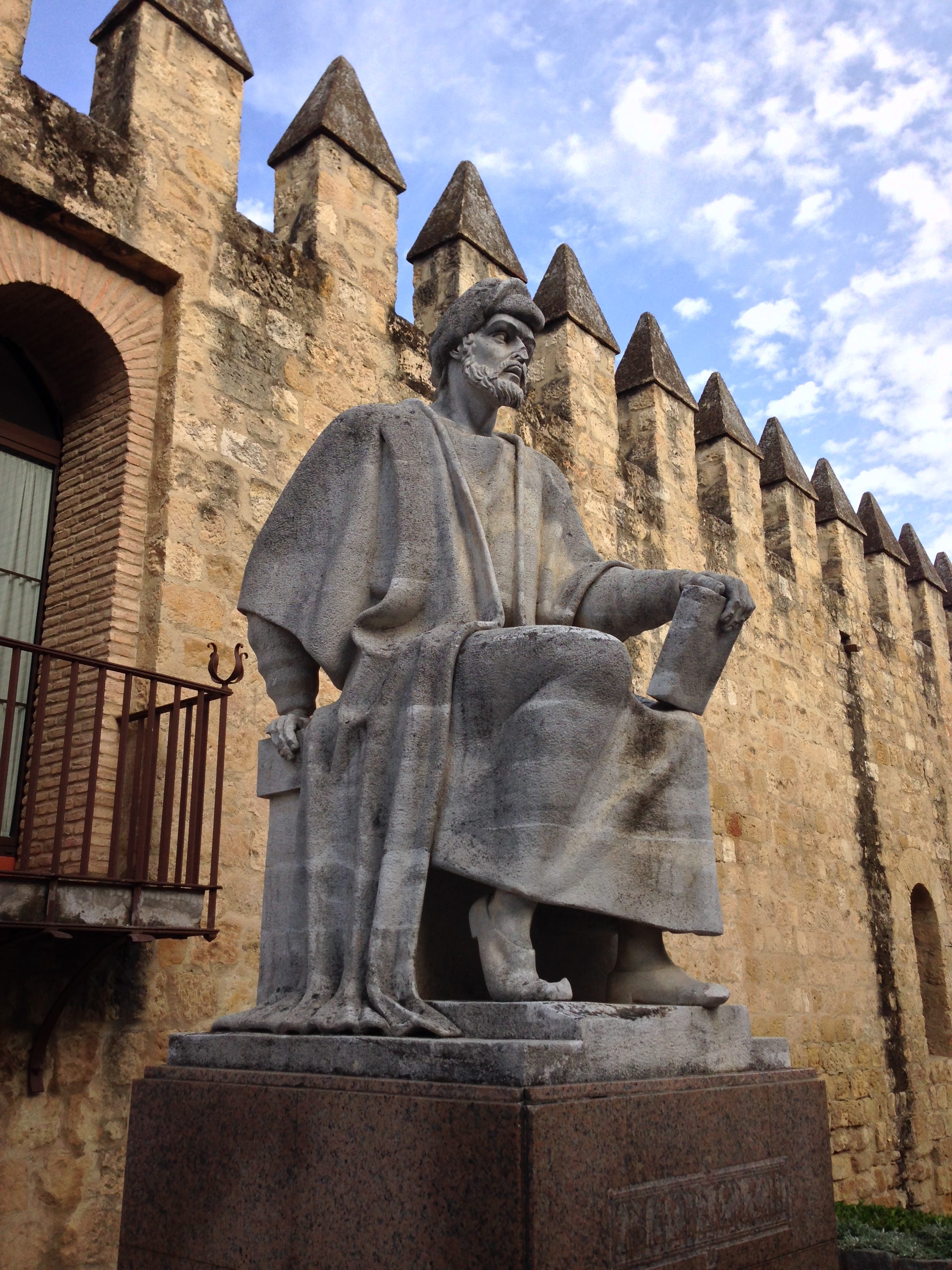
Abū al-Walīd Muḥammad ibn Ahmad Ibn Rushd
Abū al-Walīd Muḥammad ibn Ahmad Ibn Rushd (in the West and for our purposes, “Averroes”1) was born in Cordova2 in 1126. To set the stage a bit, there is a sort of friction between our philosopher and his environment - a resistance - worth noting. This resistance came between he and the rulers at the time, the Almohad Caliphate. In understanding that resistance and friction, we inexplicably get tied up in trying to figure out why Averroes was exiled and disgraced. To understand that, we of course, need to set the stage a bit.
Backdrop
Starting after his death in 632 C.E., the other Abrahamic-prophet-not-named-Jesus was taking the Christian world by storm - literally. The Holy Land had been taken by the Rashidun3 Caliphate soon after Muhammad’s death in the Seventh Century. Abu Bakr4, the father-in-law of Muhammad and close companion, was elected as the first caliph and oversaw the conquest of the Arabian Peninsula (632-634). He was then succeeded by Umar, who provided for rapid expansion in expanding into the Iranian Plateau, the Levant, two-thirds of the Byzantine Empire and nearly the entire Sasanian Empire by 644. After he was assassinated, which would become a theme, Uthman5 led the total conquest of the Iranian Plateau and continued warfare against the Byzantines. After Uthman was assassinated in 656, he was succeeded by Ali6, which triggered a civil war in the Islamic State, the First Fitna.
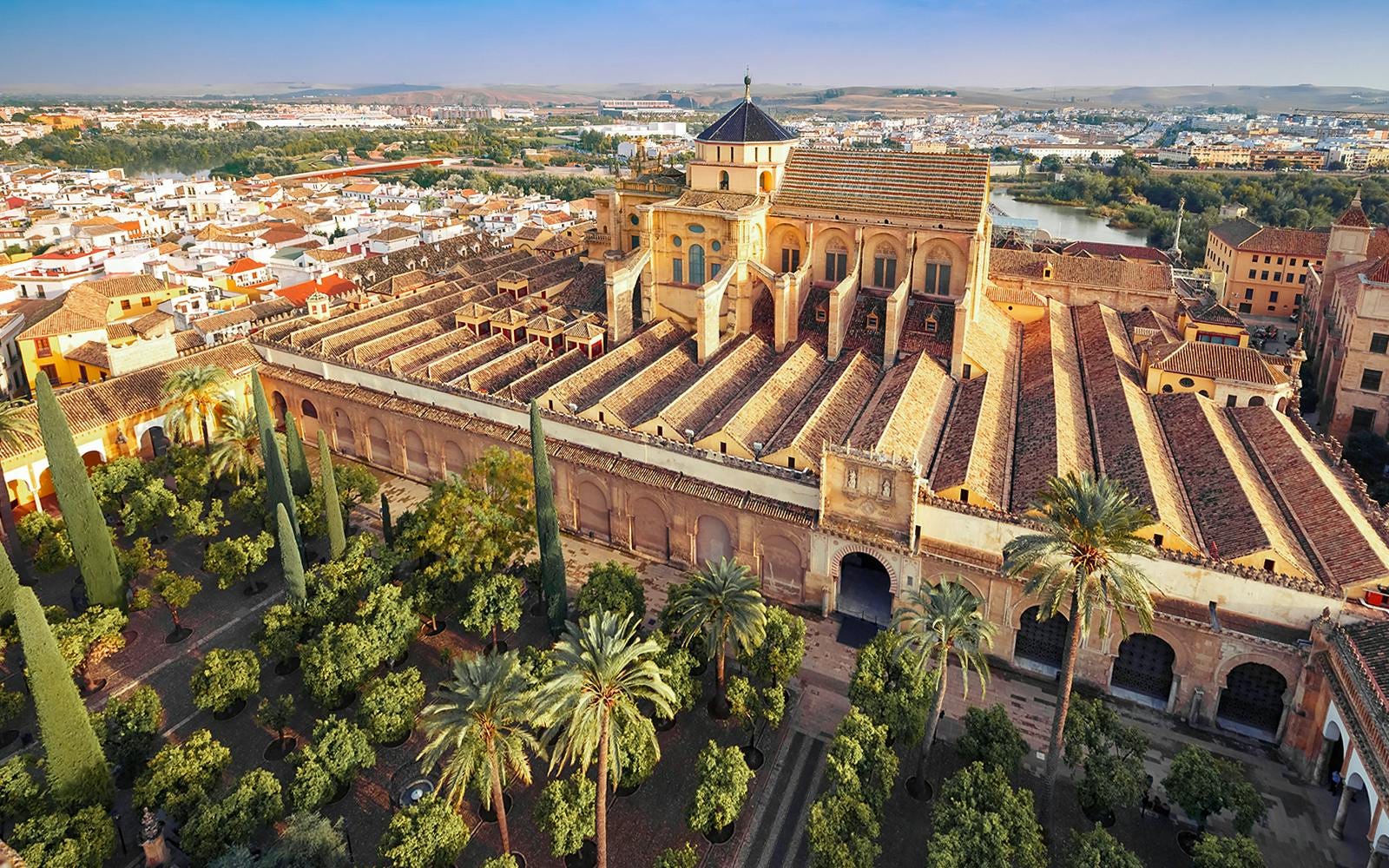
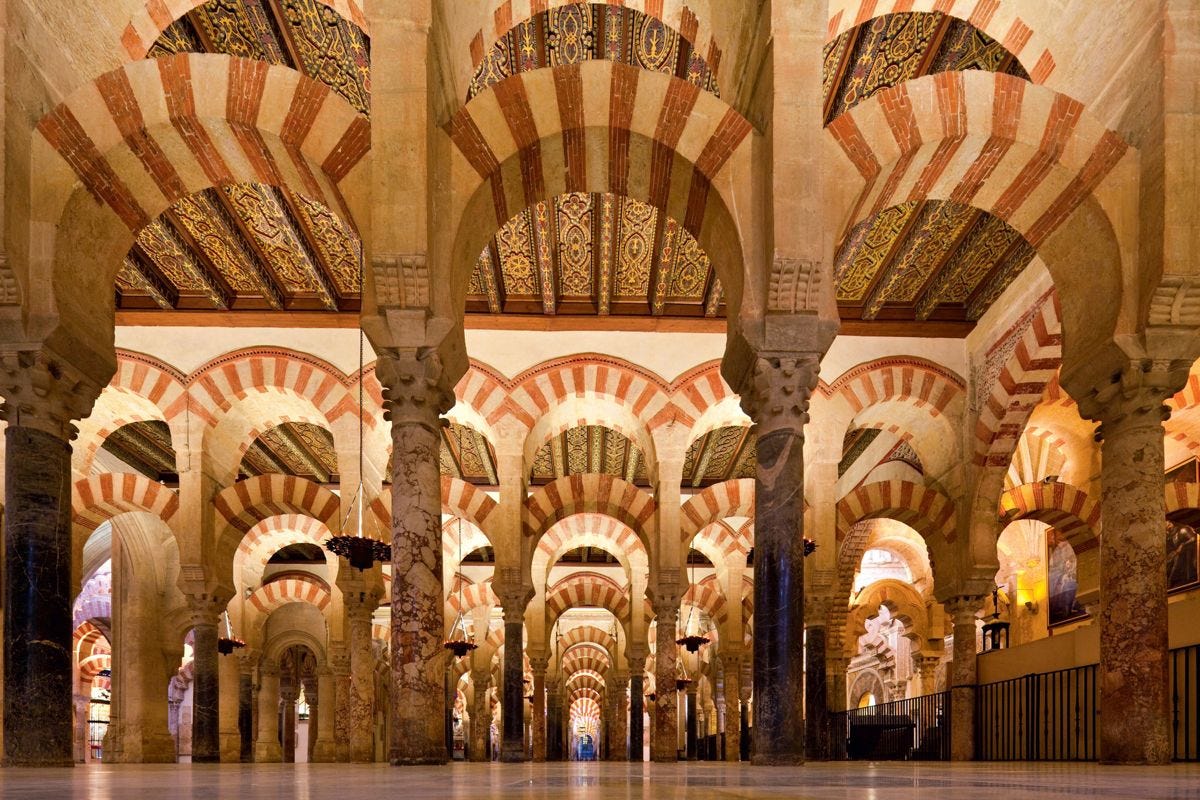
The First Fitna was an intra-group struggle to fill the political vacuum Uthman’s assassination left. Led by Mu’awiya ibn Abi Sufyan, those who had followed Uthman wanted justice for his death, rejected Ali’s suzerainty and waged war against Ali to prevent his ascendence. After a stalemate and inconclusive arbitration, a faction of Ali’s supporters, the Kharijites, became hostile to both sides of the Fitna. This led to the assassination of Ali in 661 by a Kharijite dissident.7 Faced with a much easier path to establishing a caliphate, Mu’awiya took the fight to Iraq and forced Ali’s son, Hasan, to abdicate.8 This ended the First Fitna, and consolidated power under Mu’awiya as the Umayyad Caliphate, which would reign from 661 to 750. This caliphate would conquer Al-Andalus, and when it was supplanted in 750, would establish a separate caliphate in Hispania via Cordova in 756. Their leader, Umayyad Abd ar-Rahman, then proclaimed himself Emir and started construction on The Great Mosque of Cordova9, which still stands today.
Flash forward to the turn of the 11th Century - the First Crusade had concluded with a victory for Jesus (1069-1099). However, that would soon change again within the next century. By this time, there had already been two Muslim Caliphates we talked about previously.10 These caliphates represented, you guessed it, a divine ruler ordained by God to smite everyone who didn’t believe them.11 But these caliphates were distinctively different from Christian kingdoms at the time because of the their emphasis on multiculturalism, science, and the arts that Europe had turned away from.
The caliphate refers not only to the office of the caliph but also to the period of his reign and to his dominion —in other words, the territory and peoples over whom he ruled. The office itself soon developed into a form of hereditary monarchy, although it lacked fixed rules on the order of succession and based its legitimacy on claims of political succession to Muhammad. The caliphate was constrained by neither any fixed geographical location or boundaries nor particular institutions; rather, it was coterminous with the reign of a monarch or a dynasty.
The Princeton Encyclopedia of Islamic Political Thought, Pg 82 (2013)
Our boy Averroes12 (1126–1198 C.E.) was located in what is referred to as a ‘parallel Caliphate’ - the Almoravid Dynasty, who currently ruled the caliphate that was established in the Eighth Century. This operated autonomously from the other Abbasid Caliphate13 in Baghdad.
In the early part of the eleventh century, the Almoravid congealed the tribes of Western Africa, the Sahara and the Maghreb. They established Marrakesh, a major city to this day and continued to occupy a large part of the Iberian peninsula. This isn’t that bad of a glow up for what was first considered simple nomadic Berber tribes.
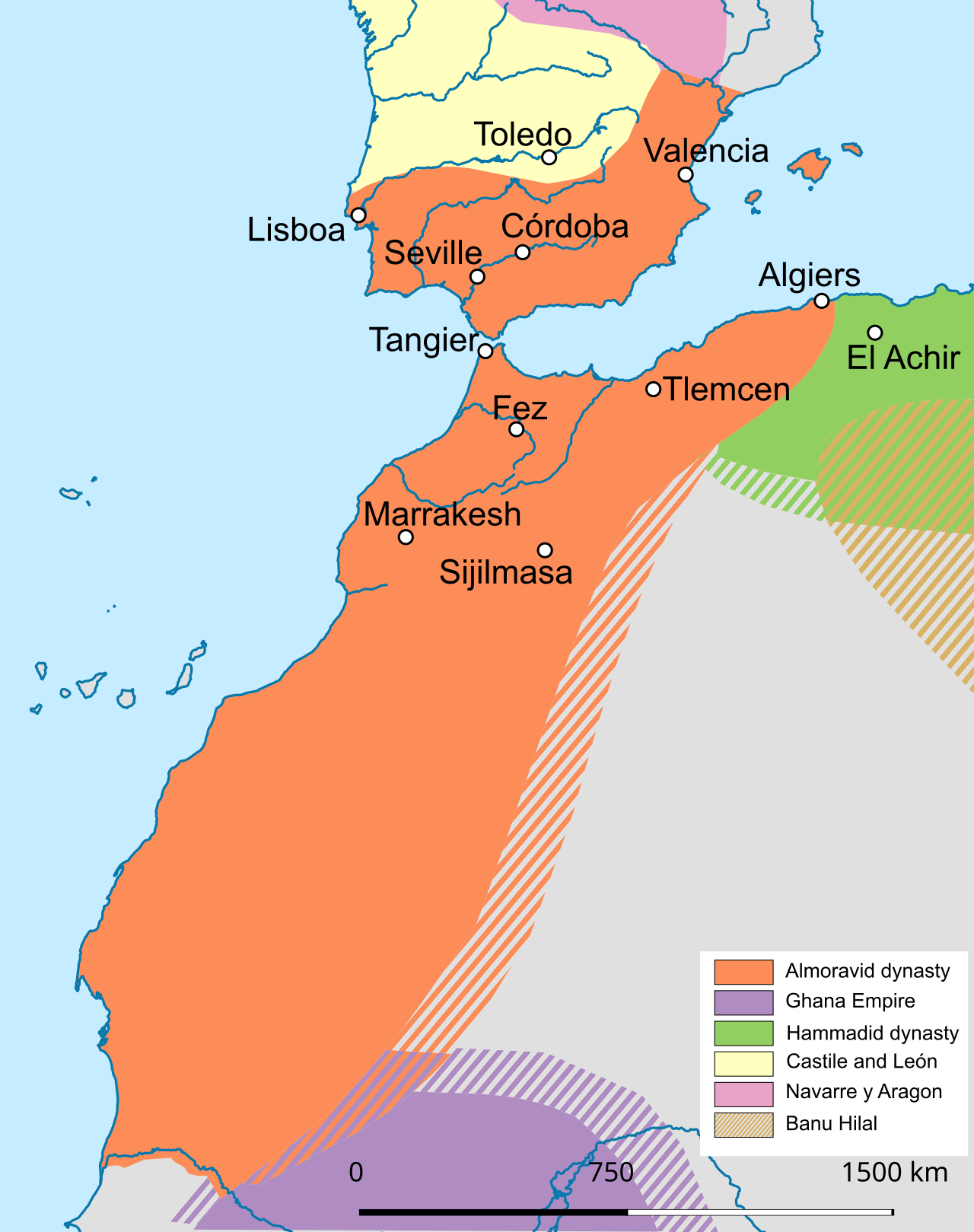
As soon as the Almoravid got to the scene though - they were replaced. At the beginning of the Twelfth Century the Almohad, with Mahdi Ibn Tumart, began to slowly chip away at the Almoravid. It was not until after Tumart’s death in 1130 that the Almohad Caliphate started to take preeminence over the Almoravid.
The Almohad caliphate and its ruling dynasty, known as the Mu'minid dynasty, was founded by Abd al-Mu’min, the successor of Tumart. Ibn Tumart’s death was kept secret for three years following his death in 1130, in order to substantiate and consolidate power under Abd al-Mu’min, the new caliph. After 1133, the caliph quickly expanded his power over the Maghreb, from the Atlas to Rif mountains. The Maghreb, or Northwest Africa, is a fascinating place that most of us in the West never see or hear about. The countries of Algeria, Tunisia, Libya, Mauritania, and Morocco span this beautiful part of Africa juxtaposition-ed14 with the Sahara Desert in the West. These places had been cultivated by the Greeks and Romans prior to Islamic rule. This shaped the parallel caliphates of the era and the people that were part of their empires.

In line with Ibn Tumart’s legacy, the Almohad philosophy and interpretation of Islam was counterbalanced to the long-standing and Almoravid favored Islamic school of thought, the Maliki school. The biggest difference separating the Maliki School of Islamic law from others was its emphasis on not only the teachings of Muhammad, but also the legal rulings of his direct successors, Abu Bakr, Uthman, Umar, and Ali. In contrast, Tumart’s teachings emphasized strict monotheism via tawhid.15 This adherence was based on god being one being, and not operating through multiple avatars. This is not unlike the Christian theological schisms that arose around this time and prior to Islam in relation to the Trinity.16
In 1143 the Almoravid Ruler, Ali ibn Yusef, died and was succeeded by his son Tashfin ibn Ali. This ended up being the break that the Almohad needed. Galvanizing the other tribes that had been loyal to the Almoravids, the Masufa and Zenata, the Almohads easily captured Tlemcen in 1144. Tashfin fled to Oran, which was promptly laid to siege and captured in 1145. Tashfin was killed while trying to escape. In 1147, the capital of Marrakesh was captured by the Almohads and the last heir was put to the sword. The Almohad had arrived.
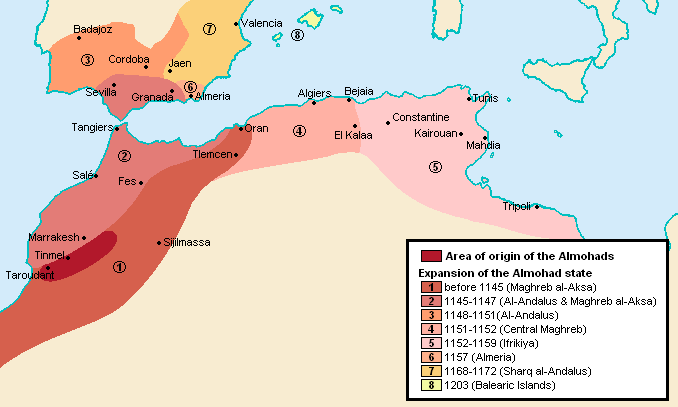
It was not until 1147 that the Almohads began to expand into our hero’s territory: Al-Andalus. That’s where we pick up with and his story on the next publication of the Pursuit of Justice.
Thanks for reading!
See you next week.
-J.R.
This is scholarly incorrect - and a bastardization of his name in the latin context
Present day Spain
Rashidun meant “Rightly guided” caliphs, coming from Sunni Islam. Sunni Islam subscribes to the belief that Muhammad’s trusted circle (Abu Bakr, Umar, Uthman, and Ali) were the ones who rightfully assumed his nascent caliphate. Meanwhile, Shia Islam, believes that solely Ali to be the legitimate caliph. Ibadi Islam only regards Abu Bakr and Umar as the rightfully guided caliphs. This runs parallel to the schisms that were taking place in Christendom at the time.
The only caliph not assassinated
Son-in-law of Muhammad
Another son-in-law of Muhammad
Supposedly both leaders were supposed to be assassinated, but the belligerents got their wires crossed, and only Ali ended up dead.
This abdication was more of a term of the treaty that would end the fighting and allow for the successor of Ma’awiya to be chosen by a council, and not by Ma’awiya himself.
This is one of my favorite examples of the unique Islamic architecture from the Islamic Golden Age. I really wanted to go when I was traveling to Spain, but alas, I ran out of money.
The caliphate (al-khilāfa) is the term denoting the form of government that came into existence in Islamic lands after the death of the Prophet Muhammad and is considered to have survived until the first decades of the 20th century. It derives from the title caliph (khalifa, pl. khulafa’ or khalā’if), referring to Muslim sovereigns who claimed authority over all Muslims.
This is a nutshell explanation of most monotheistic religions.
Averroes is the sort of bastardized latin version of his name - I don’t include that here.
They overthrew the Ummayyd Caliphate.
Totally not a word.
Literally “oneness” or “to make one” in terms of Allah.
See Filioque clause and the East-West Schism; e.g., John Romanides and Michael Pomazansky’s works criticizing this clause.